
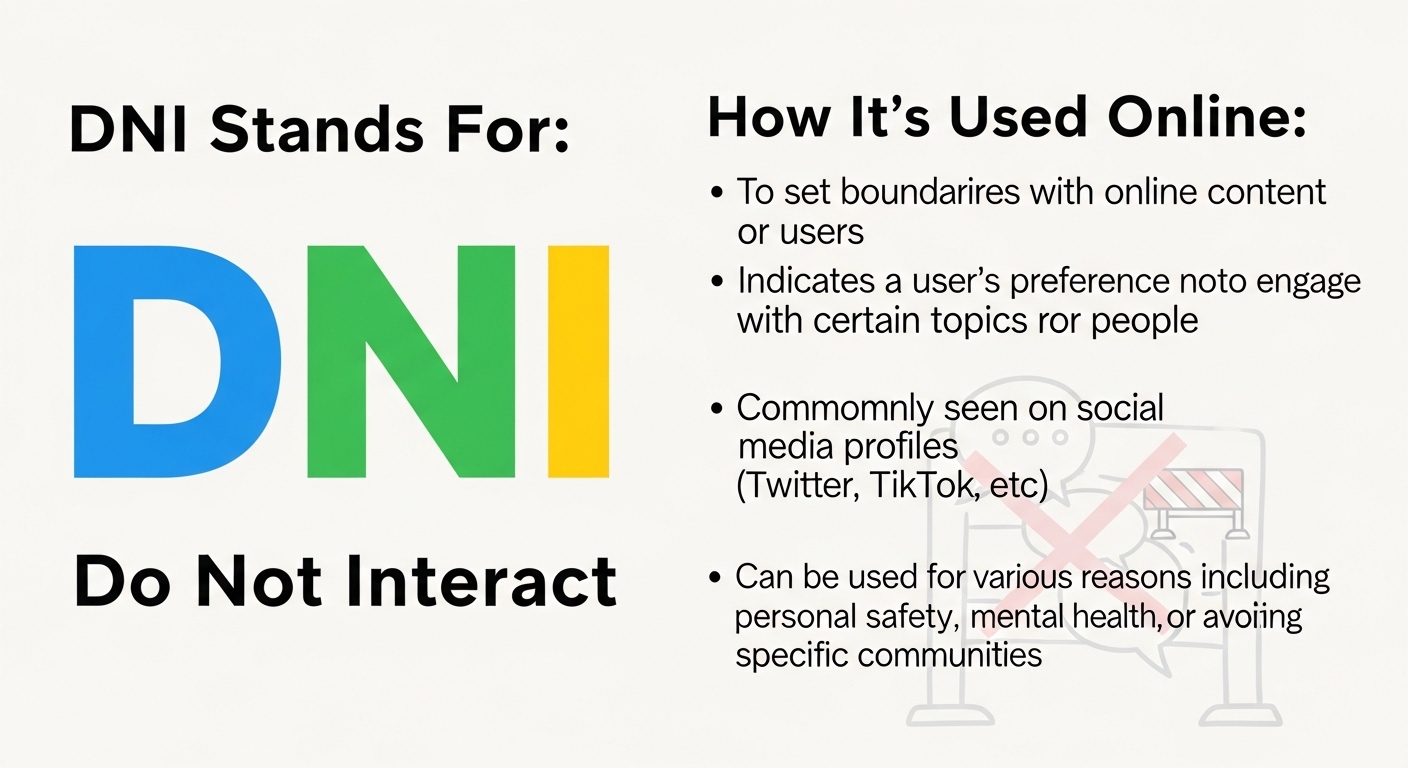
The term DNI appears in many different contexts across the internet, social media platforms, and official identification systems. If you have come across this abbreviation and wondered what it means, you are not alone. Depending on the context, DNI can represent different phrases, the most common being “Do Not Interact” in online communities and “Documento Nacional de Identidad”, a national identity document used in countries like Spain.
Understanding the meaning of DNI is important because it helps you interpret conversations correctly—especially on social media platforms such as TikTok, Twitter, and Instagram. In this article, we will explore the different meanings of DNI, how the abbreviation is used, its origins, and why it has become popular in digital communication.
What Does DNI Mean?
DNI is an abbreviation that can have several meanings depending on the situation. The two most widely recognized definitions are:
-
Do Not Interact – commonly used in online communities and social media profiles.
-
Documento Nacional de Identidad – an official national identity card used in some countries.
Let’s examine both meanings in detail.
DNI Meaning in Online Communities: “Do Not Interact”
In internet culture, DNI stands for “Do Not Interact.” It is used by individuals to indicate that certain people or groups should not engage with their content.
This phrase is especially common in social media bios, content warnings, or pinned posts.
Example of DNI Usage Online
A user profile might include statements such as:
-
“DNI if you spread hate or harassment.”
-
“DNI if you are under 16.”
-
“DNI if you support toxic fandom behavior.”
The goal is to set personal boundaries in digital spaces.
Why People Use DNI
There are several reasons why users include DNI notices in their profiles:
1. Protecting personal boundaries
People want to control who interacts with their posts or messages.
2. Avoiding online conflicts
DNI warnings help prevent arguments with individuals who have opposing beliefs or behaviors.
3. Maintaining safe communities
Some communities use DNI to discourage harassment, discrimination, or trolling.
Where DNI Is Commonly Used
You will often see DNI statements on:
-
Social media bios
-
Fan community pages
-
Content creator profiles
-
Discussion forums
-
Gaming communities
Although the phrase may seem strict, it is mostly used as a guideline rather than a strict rule.
DNI in Government Identification: Documento Nacional de Identidad
In another context, DNI refers to an official identification document used in several Spanish-speaking countries.
The full phrase “Documento Nacional de Identidad” translates to “National Identity Document.”
This identification card is widely used in countries such as:
-
Spain
-
Argentina
-
Peru
Purpose of a DNI Card
A DNI card serves multiple official purposes, including:
-
Verifying a citizen’s identity
-
Accessing government services
-
Voting in elections
-
Opening bank accounts
-
Traveling within certain regions
In many countries, the DNI card functions similarly to a national ID card or identity number.
How DNI Became Popular on the Internet
Although the government meaning has existed for decades, the internet meaning of DNI (“Do Not Interact”) gained popularity in the 2010s.
The rise of online fandoms, digital communities, and content creators led people to adopt new ways to set interaction rules.
Social media platforms accelerated this trend because:
-
Profiles allow short bio descriptions
-
Users interact with strangers frequently
-
Communities often share strong opinions
As a result, short abbreviations like DNI became common.
Examples of DNI Lists
Many users create DNI lists, which explain who should avoid interacting with them.
A typical DNI list might include statements such as:
-
DNI if you spread racism or discrimination
-
DNI if you engage in online bullying
-
DNI if you repost content without credit
-
DNI if you are part of toxic fandom behavior
These lists are usually found in:
-
Profile descriptions
-
Pinned tweets
-
Community rules
They act as guidelines for respectful interaction.
Is DNI Always Enforced?
While DNI statements express a user’s preference, they are not always strictly enforced.
Some people may ignore these notices and still interact. However, many users take DNI seriously because it helps maintain a positive online environment.
Creators or community moderators might enforce DNI rules by:
-
Blocking certain users
-
Removing comments
-
Reporting harassment
Other Possible Meanings of DNI
Although the two main meanings dominate, DNI can occasionally represent other phrases depending on the industry or conversation.
Examples include:
-
Digital Network Infrastructure – in technology discussions
-
Did Not Include – in casual messaging
-
Do Not Install – sometimes used in software instructions
However, these meanings are far less common than “Do Not Interact” or “Documento Nacional de Identidad.”
When You Should Pay Attention to DNI
Recognizing DNI is important in several situations:
1. When reading social media profiles
Understanding DNI helps you know the creator’s interaction preferences.
2. When joining online communities
Many groups include DNI rules to maintain respectful discussions.
3. When dealing with official documents
In some countries, DNI refers to a government-issued identification card.
Context usually makes the meaning clear.
Differences Between DNI and Similar Internet Terms
Internet slang often includes abbreviations similar to DNI. Some examples include:
| Term | Meaning |
|---|---|
| DNI | Do Not Interact |
| BYF | Before You Follow |
| TW | Trigger Warning |
| NSFW | Not Safe for Work |
These abbreviations help users communicate quickly and efficiently online.
Why Internet Abbreviations Like DNI Exist
Digital communication encourages short and simple expressions. Abbreviations save time and allow users to share ideas quickly.
Some benefits of internet acronyms include:
-
Faster communication
-
Clear community guidelines
-
Easy recognition across platforms
-
Efficient profile descriptions
However, newcomers may find these terms confusing until they learn their meanings.
Final Thoughts
The abbreviation DNI has multiple meanings depending on the context. In modern internet culture, it most commonly stands for “Do Not Interact,” a phrase used to set boundaries in social media communities. At the same time, in official settings—particularly in countries like Spain—DNI refers to the “Documento Nacional de Identidad,” a national identification document.
Because the internet connects people from many cultures and languages, abbreviations often evolve and take on new meanings. Understanding terms like DNI helps you navigate online spaces more effectively and communicate clearly with others.
As digital communities continue to grow, abbreviations like DNI will remain an important part of internet language.